Brokerage shakeups in the United States, German auto giants ordering humanoid robots by the thousand, LNG carriers booking yard slots through 2029. Today’s read of global supply chain flows shows a market still juggling geopolitical aftershocks, capacity scarcity, and a fresh wave of AI deployments on the operations floor.
Operations & 3PL
The fallout from the Montgomery decision is starting to redraw the U.S. brokerage landscape. Industry observers now expect a tilt toward the largest 3PLs, who can absorb the legal exposure tied to broker negligence claims and offer shippers a more defensible vetting trail. Smaller intermediaries will likely face pressure to consolidate or specialize. Source: American Shipper
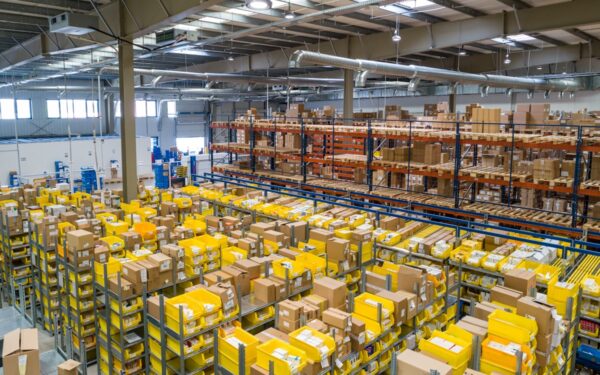
Dollar Tree just switched on a major distribution center in Arizona built to feed 700 stores across the U.S. Southwest. The new site shortens the discount retailer’s replenishment cycle for one of its fastest-growing regional clusters. It’s also a signal that capacity additions haven’t stopped, despite softer freight conditions elsewhere on the network. Source: American Shipper
The Federal Maritime Commission is reopening seats on its National Shipper Advisory Committee. The body meets annually and feeds policy guidance on ocean freight to the regulator, a lever that has gained weight as shippers push back on surcharges and routing volatility. Source: JOC
Technology & Automation
Schaeffler is moving fast. The German automotive supplier has signed a deal with a U.K.-based AI and robotics specialist to deploy thousands of humanoid robots on its factory floors from late 2026. Auto parts manufacturing is shaping up as the lead use case for general-purpose robotics, ahead even of logistics. Source: DC Velocity
At Coupa’s Inspire 2026 event, executives and customers reported planning cycles compressed from weeks to hours thanks to AI-driven transport and procurement optimization. Their pitch: “AI is the new UI.” Translation for operators, the spreadsheet is finally being retired in favor of conversational agents that act on the plan rather than just display it. Source: American Shipper
Bureau Veritas rolled out AITrack, a Supply Chain Engagement platform aimed at the visibility gap on value-chain emissions. The launch targets shippers and asset owners struggling to consolidate Scope 3 data across tiers of suppliers, a recurring blocker for credible decarbonization claims. Source: Container News
A fresh market read on humanoid robots: unit costs will drop sharply through 2030 as supply chains for actuators and sensors mature, with automotive and logistics absorbing the bulk of early demand. ROI remains the open question. Some pilots already pay back inside 24 months; others stall on integration debt. Source: DC Velocity
Sustainability & Energy
LNG carrier orders are surging. Shipowners are racing to lock in the last 2029 construction slots at South Korean yards, with capacity scarcity now the binding constraint, not financing. The orderbook reflects long-term confidence in gas demand but raises the risk of overcapacity later in the decade. Source: Lloyd’s List
Wärtsilä signed two equipment supply contracts with Origem Energia to support balancing power projects feeding Brazil’s national grid. The deal covers 36 Wärtsilä 34SG engines across two batches and slots into Brazil’s strategy to firm up renewables with flexible gas-fired capacity. Source: Container News
LNG shipping rates are still well above pre-Hormuz levels. The post-conflict bounce-back has been incomplete, with insurance premiums and rerouting overhead keeping the spot market structurally elevated. Charterers are increasingly turning to long-term contracts to hedge the residual volatility. Source: Lloyd’s List
International Markets
Nvidia’s Vera Rubin platform is back on track. Cooling-architecture issues have been cleared, according to supply-chain sources, and the company has confirmed a 3Q26 production ramp. The unblocking matters well beyond AI hardware, since it sets the cadence for HBM4 memory shipments and advanced packaging capacity in Taiwan. Source: DIGITIMES
Foxconn is telling investors AI servers will more than double its annual shipments. Cloud and networking already accounted for nearly half of group revenue in Q1, and the consignment model is shifting how revenue lands across quarters. For supply chain planners, this is the structural pull behind the GPU bottleneck. Source: DIGITIMES
DP World is staying long on Africa. The port operator is pressing ahead with infrastructure builds from Mozambique to Congo despite the inflationary pressure of regional conflicts. The thesis: African trade volumes structurally outgrow short-term volatility, and early port positions translate into multi-decade economic rent. Source: SupplyChainBrain
Greek-controlled tonnage expanded its reach in 2025, navigating conflict-driven reroutings while picking up longer-haul trades. The Greek fleet’s adaptability is a useful proxy for how shipping capacity reallocates when geopolitics rewires the map. Source: Lloyd’s List
Related Coverage
- Amazon Opens Logistics Network to Outside Brands With New Supply Chain Arm
- EPG and Locus Robotics Team Up on WMS-Driven AMR Integration
- Weetabix Extends UK Warehousing Partnership With XPO Logistics
- King Jouet Merges Product and Supply Under Abdelatif Karali
Updated daily, your morning briefing on global supply chain.