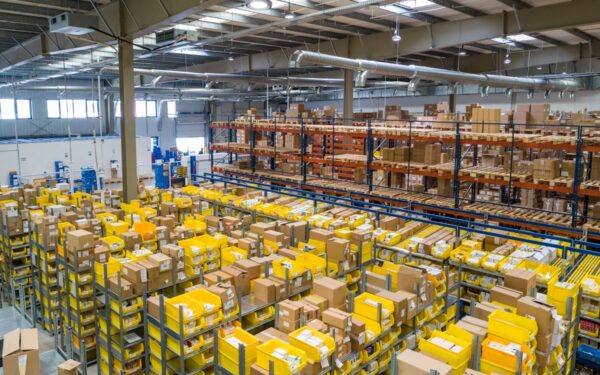
Amazon has formally extended its in-house logistics capabilities to the broader market through a new subsidiary called Amazon Supply Chain Services (ASCS). The unit packages transport, distribution, order preparation and parcel shipping into a service offer aimed at companies that are not part of the e-commerce group’s seller or vendor network, putting Amazon in direct competition with global express carriers and contract logistics providers.
An "AWS-Style" Move into Logistics
The Seattle-based group is positioning ASCS as a horizontal infrastructure play rather than a captive service. “Like AWS for cloud computing, we are bringing all the infrastructure, intelligence and scale of our services within reach of companies around the world,” said Peter Larsen, vice-president of Amazon Supply Chain Services. The pitch leans on assets honed over two decades of operating Amazon’s own retail flows.
The Network Behind the Pitch
Amazon now runs more than 1,300 logistics sites globally, supported by over 80,000 truck trailers, 24,000 intermodal containers and a fleet of more than 100 cargo aircraft. ASCS draws on this footprint to offer end-to-end services covering long-haul freight, warehousing, fulfilment and final-mile delivery. The proposition gives shippers access to capacity built around peak-driven retail flows, with the operational discipline that has come to define Amazon’s last-mile model.
Early Customer Wins
The first announced customers underline the scope of the offer. Procter & Gamble and 3M have signed up for freight services, apparel retailer Lands’ End is using ASCS for storage, and American Eagle Outfitters has tapped the network for delivery. The line-up signals that Amazon is aiming squarely at large multinational shippers – exactly the customer base that anchors order books at incumbent express integrators and contract logistics players.
Pressure on Incumbents
For traditional 3PLs and parcel carriers, the launch hardens a long-standing fear: that Amazon would eventually monetise its captive logistics network. With named brand customers and a defined service catalogue, ASCS turns that scenario into an active commercial threat in transport, warehousing and parcel delivery alike. The next test will be how quickly Amazon can scale third-party volumes without disrupting service levels on its own retail network.