Global supply chains opened the week navigating a familiar set of crosswinds: a still-closed Strait of Hormuz reshaping Middle East energy flows, fresh capacity announcements from ocean carriers, and a U.S. trade-policy reset after a court setback for the White House on Section 122 tariffs. Today’s brief rounds up the most material moves logged across operations, technology, sustainability and international markets in the past 24 hours.
Operations & 3PL
Yang Ming pushes deeper into Latin America. The Taiwanese carrier has added two Far East–Latin America loops to its network, securing slot arrangements with HMM and ONE to cover both the east and west coasts of South America. The expansion strengthens Yang Ming’s exposure to a corridor that has absorbed traffic redirected away from the Red Sea. Source: Container News.
Hapag-Lloyd opens new West Africa office. The German liner is formalising its West Africa push with an office in Cotonou, Benin, set to begin operations on May 20. The move underlines a broader carrier appetite for emerging trade lanes as mainline Asia–Europe volumes remain volatile. Source: Container News.
USPS narrows quarterly loss. The U.S. Postal Service trimmed its second-quarter operating loss to US$642 million, an improvement on prior periods but still well short of profitability. Cost discipline and parcel volume gains from e-commerce shippers are credited for the move, though the agency continues to flag structural headwinds. Source: FreightWaves.
U.S. retail imports set to soften into autumn. The latest Global Port Tracker, released by the National Retail Federation and Hackett Associates, shows March imports at the leading U.S. container ports reached 2.16 million TEU, but warns of a slowdown into the fall as inventory rebuilds taper and tariff uncertainty weighs on order books. Source: Logistics Management.
Technology & Automation
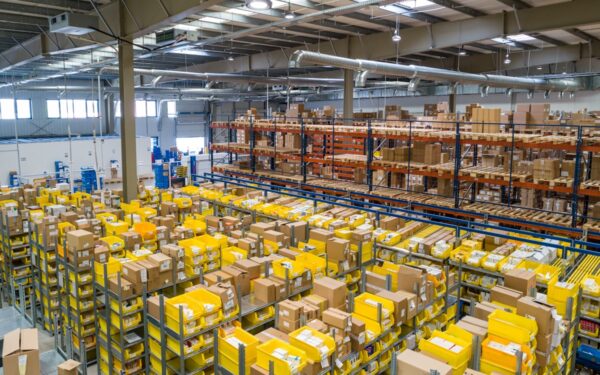
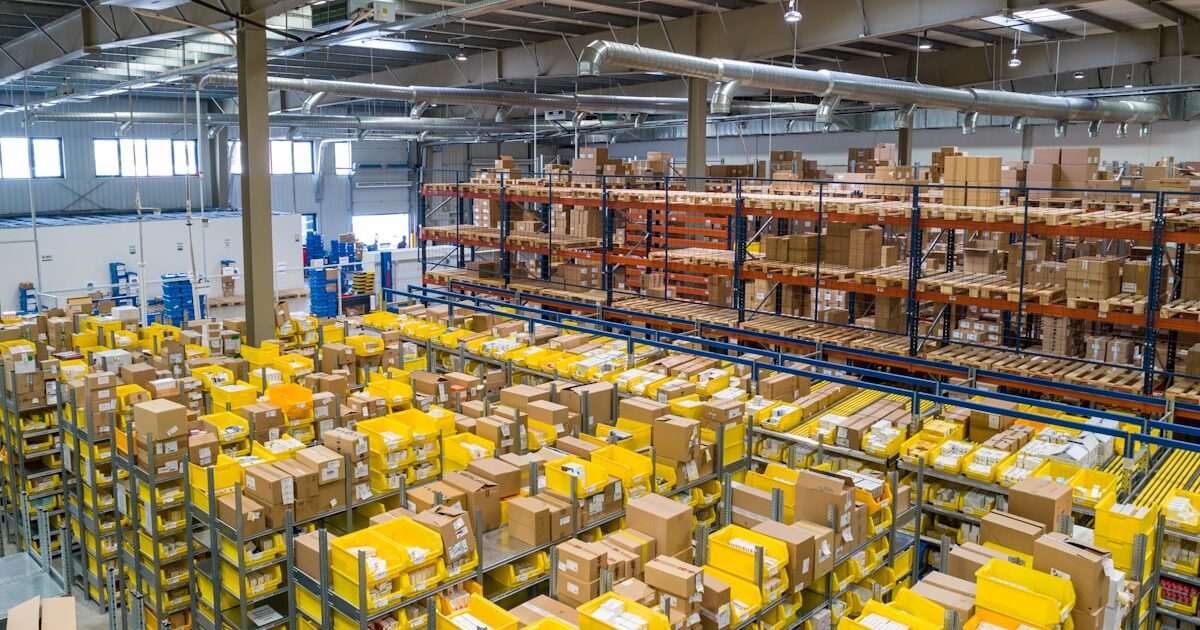
EuroSort scales accuracy at Mouser Electronics. At its global distribution hub in Mansfield, Texas, electronics distributor Mouser is leaning on EuroSort split-tray sorters to maintain 99%+ order accuracy with same-day shipping and 8 p.m. cut-offs. The deployment is being positioned as a benchmark for high-mix, small-parts fulfilment. Source: DC Velocity.
Semiconductors squeezed by AI demand. A new DIGITIMES analysis warns of a rare convergence pressuring chip supply: surging AI compute demand, geopolitical fragmentation, and persistent process bottlenecks. The note expects shortages to extend into 2026 across both leading-edge logic and memory. Source: DIGITIMES.
ABS and HD KSOE team up on autonomous shipping. Classification society ABS and HD Korea Shipbuilding & Offshore Engineering have signed an MoU to cooperate on digital shipbuilding, cybersecurity and autonomous vessel technologies – a signal that yard-led R&D is accelerating toward commercial-grade autonomy. Source: Container News.
ByteDance lifts AI capex above US$30 billion. The TikTok parent is raising its 2026 capital expenditure plan by at least 25% to more than 200 billion yuan, citing AI infrastructure needs and rising memory costs. The decision adds further pressure on already strained semiconductor and data-center supply chains. Source: SCMP Business.
Sustainability & Energy
Pandora to label diamond carbon footprints. The Danish jeweller will roll out carbon footprint labelling on its lab-grown diamonds, with CEO Berta de Pablos-Barbier framing the initiative as a response to rising consumer demand for verifiable sustainability credentials. The move feeds into a broader wave of product-level CO₂ disclosure across consumer goods. Source: ESG Dive.
Middle East bunker demand reshuffled by Hormuz risk. April bunker fuel demand softened across key Middle Eastern hubs as the Hormuz blockade altered ship routings, while activity at selected Omani ports recovered on the back of diverted call patterns. Trading desks are watching for a sustained shift in regional bunker pricing. Source: Hellenic Shipping News.
South Korea courted as Gulf oil storage hub. Middle Eastern producers are stepping up interest in storing crude at South Korea’s strategic petroleum reserves – the world’s sixth-largest – as the Hormuz blockade extends. The story illustrates how energy logistics is being recalibrated around Asian inventory points. Source: SCMP Business.
International Markets
Drewry WCI up 3% week-on-week. Drewry’s World Container Index rose 3% in the latest reading, with the benchmark continuing to reflect tight effective capacity on rerouted Asia–Europe and Asia–Mediterranean strings. Procurement teams should expect renewed pressure on index-linked contracts. Source: Hellenic Shipping News.
Greek shipping finance hits US$60 billion. Petrofin Research data show Greek bank shipping finance grew 11.5% in 2025 – up from 5% the prior year – bringing total drawn and committed exposure to nearly US$60 billion. The figure underscores the resilience of Greek maritime capital amid rate volatility. Source: Hellenic Shipping News.
U.S. court strikes down Section 122 tariffs. In a 2-1 ruling, the Court of International Trade has invalidated the White House’s Section 122 tariffs, finding the statute does not authorise such measures under the cited economic conditions. Importers are recalibrating duty exposure pending a likely appeal. Source: Logistics Management.
China posts record April export value. Despite the Hormuz crisis lifting freight costs, China’s April exports hit a monthly record by value, with shippers leveraging diversified routings via the Cape and intra-Asia transhipment. The print supports the view that Chinese manufacturers continue to absorb logistics shocks. Source: SCMP Business.
Related Coverage
- Amazon Opens Logistics Network to Outside Brands With New Supply Chain Arm
- Shippeo Acquires Logward to Pair Visibility with AI Workflow Orchestration
- Damart Reuses High-Speed Sorter at Hem to Power Returns and Store Replenishment
- French Agency ADEME Validates Environmental Benefits of Opalean’s Pallet Model
Updated daily — your morning briefing on global supply chain.