Global supply chains opened May on a familiar split-screen: carriers and 3PLs reporting resilient quarterly earnings even as freight markets digest fresh capacity, autonomous trucking edges into commercial scale, and the regulatory tug-of-war over shipping decarbonization sharpens. Today’s brief rounds up the most consequential moves of the past 24 hours across operations, technology, sustainability and international markets.
Operations & 3PL
DHL Group lifts Q1 earnings despite softer volumes. The German logistics giant grew operating profit in the first quarter of 2026 even as shipment volumes and revenue declined, citing tighter cost discipline and contract renewals across its Supply Chain and Express divisions. Management flagged geopolitical disruption and jet fuel volatility as the principal headwinds for the rest of the year. Source: Container News.
Schneider National beats expectations, holds full-year outlook. The US truckload and intermodal carrier topped Q1 estimates and reiterated guidance, sending a constructive signal on US freight demand after several quarters of margin pressure. Executives pointed to firmer dedicated and intermodal pricing as evidence the cycle is turning. Source: FreightWaves.
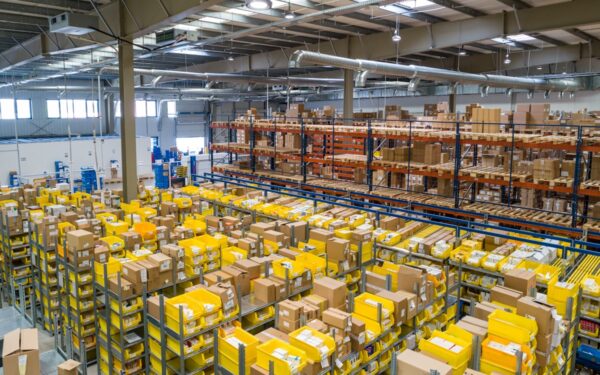
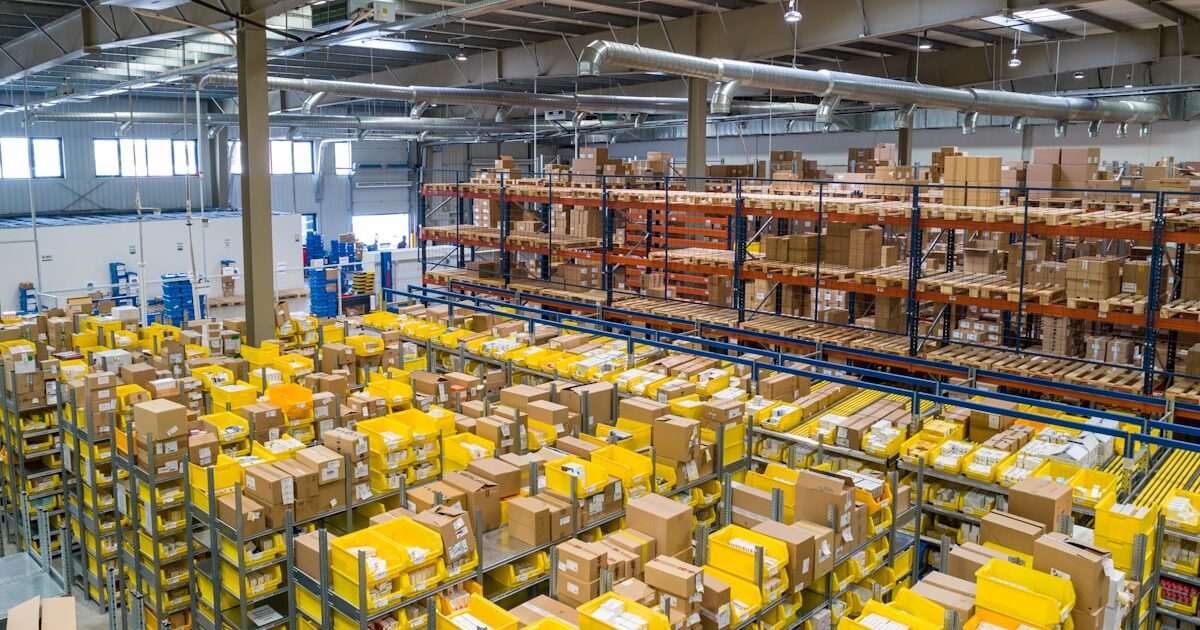
Target opens $265M Houston “receive center” upstream of six DCs. Target has launched a 1.2-million-square-foot upstream warehouse in Houston designed to consolidate inbound freight before it flows into six regional distribution centers, adding 185 jobs. The new facility is the retailer’s first of this kind and is built to relieve dock and storage congestion further down the network. Source: DC Velocity.
Pure Seoul anchors UK growth with 10-year industrial lease. Korean beauty retailer Pure Seoul has signed a decade-long agreement with a new industrial and logistics partner in the United Kingdom to support an accelerating store and e-commerce roll-out. The deal underlines how D2C beauty operators are locking in long-duration warehouse capacity to underwrite international expansion. Source: Retail Week.
Technology & Automation
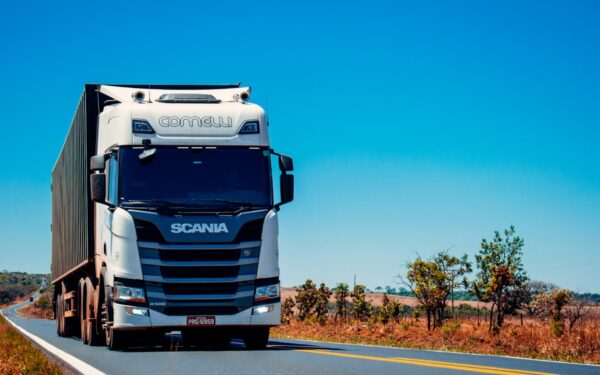
Aurora and Hirschbach scale up to 500 driverless trucks. Aurora Innovation and Iowa-based Hirschbach Motor Lines have expanded their partnership, with the carrier set to operate up to 500 Aurora Driver-powered trucks under a hybrid manned/unmanned network model. The deal is one of the largest commercial commitments to date for autonomous trucking on US interstates. Source: FreightWaves.
Bot Auto completes first humanless commercial run. Houston-based Bot Auto has run a 231-mile empty-cab move from Houston to Hutchins on time and without remote assistance, claiming an industry first for fully unmanned commercial truckload operations. The milestone arrives as fleets pressure-test driver-out economics on regional lanes. Source: FreightWaves.
Zebra Technologies takes stake in Apera AI. Zebra has invested in Canadian robotic vision specialist Apera AI, deepening its push into 4D vision software for picking and induction tasks. The move continues Zebra’s reshaping toward AI-enabled material handling, complementing its earlier acquisitions in fixed industrial scanning. Source: DC Velocity.
AMRs cross from pilots to scaled fleets. A new Logistics Management roundtable confirms autonomous mobile robots have moved decisively from early experimentation to mainstream warehouse deployment, with fleets now supporting picking, transport and replenishment across more diverse environments – including ambient, cold and high-mix sites. Vendors increasingly compete on orchestration software rather than hardware. Source: Logistics Management.
Sustainability & Energy
Cosco/OOCL group commits $2.2B to LNG dual-fuel boxships. OOCL has placed orders with Hudong-Zhonghua Shipbuilding for twelve 13,600 TEU LNG dual-fuel container vessels, a cornerstone investment in parent Cosco Shipping’s lower-carbon fleet strategy. The order extends a broader Asian carrier shift toward dual-fuel newbuilds as the IMO debate intensifies. Source: Container News.
IMO carbon plan faces growing revolt as US courts the “silent majority.” US Federal Maritime Commission Chair Laura DiBella this week urged IMO member states to consider alternatives to the proposed global carbon pricing regime for shipping, signalling Washington’s intent to widen the coalition opposing the current proposal. The push complicates the path to MEPC adoption later this year. Source: gCaptain.
UNFCCC says Iran war is “supercharging” the energy transition. UNFCCC Executive Secretary Simon Stiell told markets that the conflict around the Strait of Hormuz is accelerating government and corporate moves to cut hydrocarbon dependency, framing renewables as a supply-chain resilience play rather than a purely climate one. Bunker prices, meanwhile, continue to rise on Middle East risk premia. Source: gCaptain.
International Markets
Union Pacific and Norfolk Southern refile mega-merger with STB. The two Class I railroads have filed a revised application for their proposed combination, adding data from other Class I carriers and updated shipper-savings estimates. The submission lands as a “Stop the Rail Merger” coalition led by BNSF mobilises against the deal, setting up a hard-fought 2026 review. Source: Supply Chain Dive.
Cosco doubles down on emerging trades as Q1 net profit drops 49%. China’s Cosco Shipping reported a steep first-quarter profit decline, with revenue falling on every major lane bar its domestic network and container shipping revenue down 13%. Management is reallocating capacity toward intra-Asia and Latin America to offset weakness on East-West trades. Source: JOC.
Tenet and Crown merge to consolidate freight tech software. Freight technology vendors Tenet Transportation Tech and Crown Data Systems have agreed to merge, creating a combined company serving more than 400 customers and partners across North America. The tie-up adds to a steady drumbeat of consolidation in the freight software stack. Source: DC Velocity.
ABS acquires RMC Global to bolster cyber and resilience services. Classification society ABS, through its ABS Consulting affiliate, has acquired RMC Global, an industrial cybersecurity and risk management specialist. The deal expands ABS’s advisory bench as shipowners and ports navigate rising cyber-physical exposure across maritime and energy assets. Source: gCaptain.
Related Coverage
- Dematic Partners with GreyOrange for AI Warehouse Orchestration
- Action Opens Sixth French Distribution Centre with GXO in Onnaing
- Bayer Crop Science Centralizes Seed Logistics with DHL Supply Chain in France
- French Agency ADEME Validates Environmental Benefits of Opalean’s Pallet Model
Updated daily — your morning briefing on global supply chain.